
Written by Ann C. McCulloch, MBA | Medically Reviewed by Bradley Allen Eli, DMD, MS
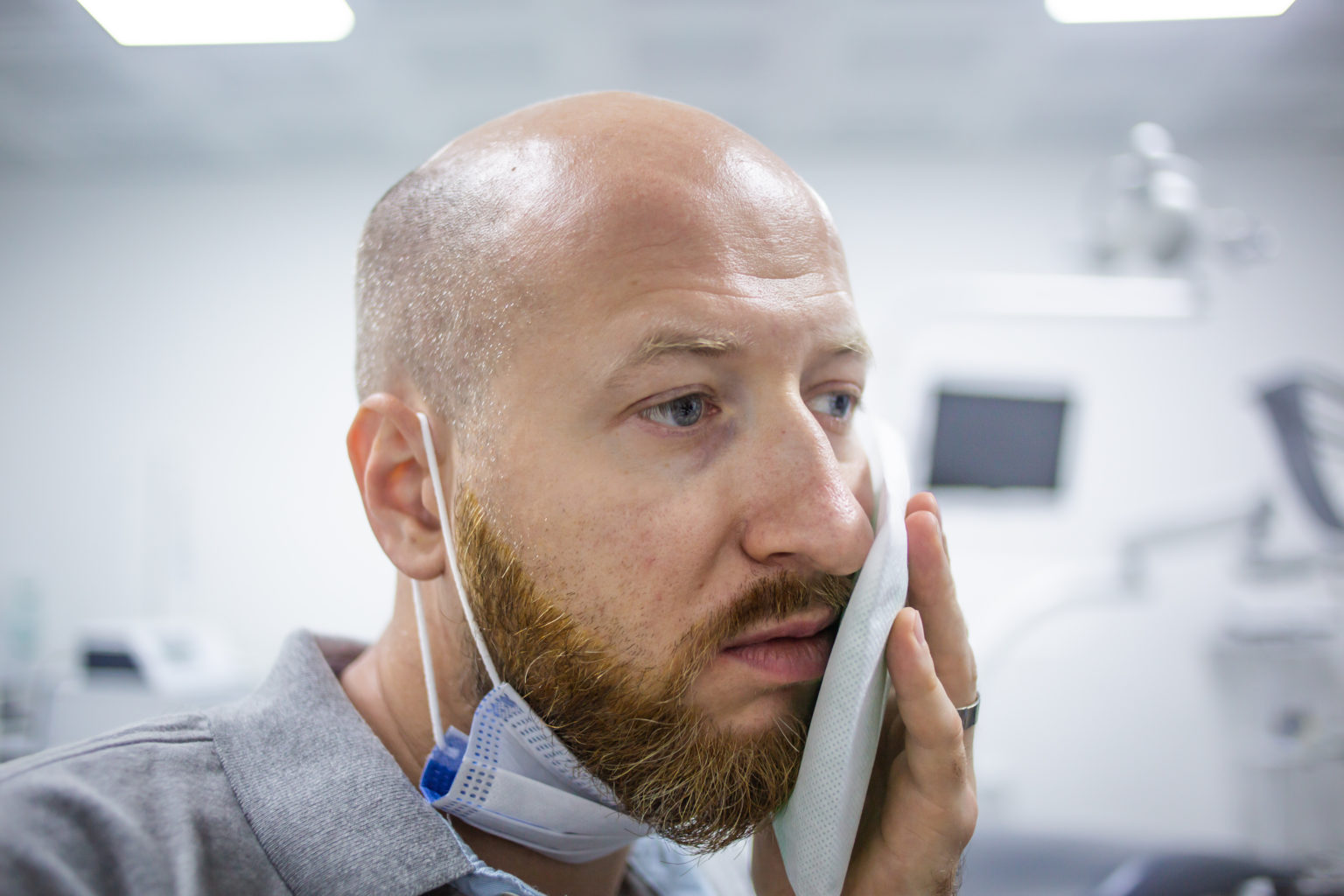
Jaw pain after the dentist usually comes from sprain or strain to the temporomandibular joint (TMJ) and the muscles that support it, caused by prolonged or forceful mouth opening during treatment. Mild soreness in the first few days is normal, but pain that lasts longer than a week may signal a TMJ injury that needs early, targeted treatment. The most effective relief comes from a multimodal approach: jaw rest, hot/cold therapy, physical therapy, pain management, and an overnight bite guard.
Persistent jaw pain after the dentist is something to take seriously. Local inflammation of the gums, sore jaw muscles, and tooth sensitivity are common in the days following a dental procedure, but jaw pain that continues beyond a week can signal an injury to the temporomandibular joint (TMJ). Left untreated, this kind of jaw strain is a known risk factor for developing a chronic TMJ pain disorder. Below, we explain how dental work can injure the jaw joint and outline a step-by-step plan for relief.
The temporomandibular joint (TMJ) and its surrounding muscles and ligaments make up one of the most complex and heavily used joint systems in the body. The joint has two distinct planes of motion, a floating articular disc, major and minor ligaments, and four paired muscles that coordinate eating and speaking. Like any complex joint, the TMJ is vulnerable to sprain and strain injuries — clinically referred to as jaw and muscle sprain/strain, or JAMSS.
Jaw sprain or strain during dental work is most often caused by hyperextension. When a dentist asks a patient to “open wide,” most people can comfortably open to about two finger-widths. Once instruments and hands are working inside the mouth, however, the jaw is frequently pushed past this comfortable limit.
Jaw hyperextension can traumatize the TMJ ligaments and muscles, triggering a guarding reflex in which the muscles contract and stay tense. This pattern is most clearly documented in third molar (wisdom tooth) removal, where substantial force or forced extension is often needed to access the back molars. A 2025 study published in the journal Medicina found that patients with impacted third molars showed significantly more TMJ dysfunction than those without — especially under age 25 — underscoring how directly extraction-related strain can affect joint health.
Prolonged procedures are a separate risk factor. Even without hyperextension, holding the jaw open for an extended period can trigger the same guarding reflex. If you know a procedure will run long, ask your dentist for a short break partway through to give the jaw muscles a rest.
A third, often confounding, source of TMJ pain after dental visits is trauma from the injection of local anesthesia. Symptoms of injection trauma typically appear within the first few days and present as numbness and tingling rather than the soreness and aching of a muscle strain.
Learn more about how things can go the other direction, i.e. how TMJ can cause tooth pain.
The guarding reflex described above is the common thread linking a one-time dental injury to long-term TMJ pain. This muscle hyperreactivity is the bridge between an acute strain and a chronic TMJ flare-up. Here’s how the cycle develops:
This is the vicious cycle behind many chronic TMJ disorders. Even though the original injury may have been microscopic damage to a ligament, ongoing muscle tension and central sensitization keep the pain going long after the tissue itself has healed. A 2023 case-control study published in the journal Pain found that people with chronic TMD develop secondary pain hypersensitivity far more readily than healthy individuals — direct evidence that the nervous system itself becomes part of the problem in long-standing jaw pain.
“Strain injuries from dental procedures need to be taken seriously. Studies have shown that over 50% of people with chronic TMJ pain cite dental work as the initiating factor. The key to preventing chronic TMJ pain is to aggressively treat jaw pain in the acute phase, when it first starts”, explains Bradley Eli, DMD, MS, an orofacial pain specialist.
The most effective path to jaw pain relief is a multimodal approach that combines several tools at once, rather than relying on any single fix. Here are the main components:
All of these interventions are included in the Speed2Treat® Home Healing Kit. The kit was designed by orofacial pain specialists to give you everything you need to comprehensively treat acute jaw pain. Research supports combining structured manual therapy with jaw stabilization exercises for meaningfully better outcomes than home exercises alone, reinforcing the case for a multimodal approach over any single treatment. Don’t let your jaw pain turn into a chronic TMJ pain condition. Start your journey toward jaw pain relief today with the Speed2Treat® Home Healing Kit!
Most jaw pain after dental work improves within one to two weeks with the self-care steps above. Contact a doctor or orofacial pain specialist if you notice any of the following:
Mild soreness from a dental visit typically resolves within a few days. If the pain is from a jaw sprain or strain (JAMSS), recovery generally takes one to several weeks with appropriate care. Pain lasting longer than a week, or getting worse, should be evaluated by a doctor.
Some soreness is normal after holding your mouth open, even for a short procedure. Pain that’s out of proportion to the procedure, or that doesn’t ease up within a few days, may point to TMJ strain rather than ordinary post-treatment soreness.
Yes. Local anesthesia injections can occasionally strain the muscles around the jaw joint, particularly with inferior alveolar nerve blocks used for lower teeth. True nerve damage from an injection is rare and usually presents as numbness or tingling rather than pain.
Holding the mouth open for an extended period puts sustained strain on the TMJ ligaments and muscles, even without forceful stretching. Procedures lasting more than an hour or two carry a higher risk of triggering jaw soreness that lingers afterward.
Mild strain often improves with rest, but ignoring jaw pain in the first week or two raises the risk that muscle guarding and pain sensitization will set in, making the problem harder to resolve. Early, active treatment gives the best chance of a full and faster recovery.
A multimodal approach works best: stick to soft foods, alternate heat and cold on the jaw, do gentle range-of-motion exercises, and consider an overnight anterior bite guard to unload the jaw muscles while you sleep.